
+86 181 4337 0772

hehaixiong@hykygz.com
 English
-
 繁体中文
繁体中文 -
English
-
عربي
-
Pilipino
-
Malay
-
ภาษาไทย
-
IndonesiaName
-
Tiếng Việt


 English
-
繁体中文
-
English
-
عربي
-
Pilipino
-
Malay
-
ภาษาไทย
-
IndonesiaName
-
Tiếng Việt

A Professional Guide: How to Choose the Right Gloss Meter?
Author:Guangzhou Huayuan Scientific Instruments Co., Ltd.
Click:
Time:2025-10-22 20:54:56
Selecting the appropriate gloss meter hinges on understanding the application of different measurement angles. In accordance with international standards (such as ASTM D523 and ISO 2813), common gloss meters feature 20°, 60°, and 85° measurement angles, each designed for surfaces with specific gloss ranges.
60° Universal Angle:Ideal for most semi-gloss to mid-gloss surfaces (approximately 10-70 GU). As the most prevalent angle in quality control, the 60° measurement is typically the default choice when the gloss level of a sample is unknown.
20° High-Gloss Angle:Engineered for high-gloss surfaces (exceeding 70 GU). This angle offers superior resolution for distinguishing between high-gloss variations and is widely used for automotive paints, high-end plastics, and printing varnishes.
85° Low-Gloss / Matte Angle:Used for measuring low-gloss or matte surfaces (below 10 GU). This angle effectively amplifies the visual differences between matte finishes and is commonly applied in architectural coatings, matte films, and specialty papers.
Many modern gloss meters now integrate multi-angle functionality (e.g., 20°/60°/85°), providing all-in-one versatility and significantly enhancing inspection flexibility. When procuring a gloss meter, it is advisable to base your selection on the primary gloss range of your products. Alternatively, opting for a multi-angle model is a strategic choice to accommodate diverse and evolving measurement requirements in the future.
Your likes are the fuel that keeps me writing.
YouArticle
已有0人推荐
Recommended article
—


Recommended Products
—
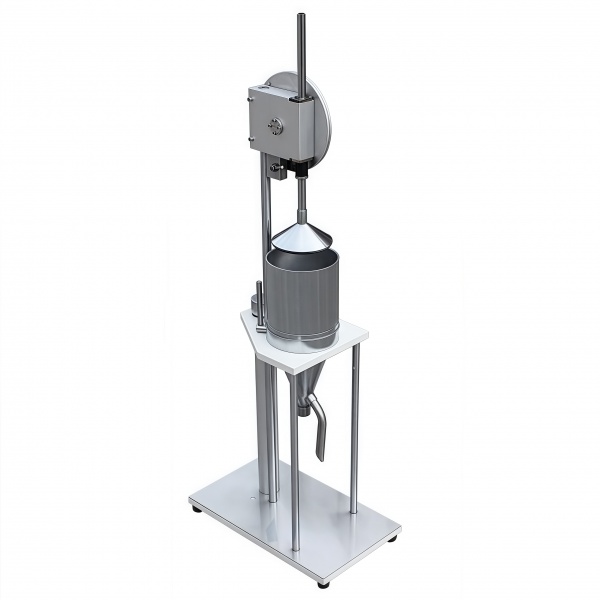
HY-5641 Paper Beating Tester
This instrument is strictly designed according to national standards and the Schopper-Riegler method principle. It adopts a mature manual structure, achieves stable operation through counterweight adjustment, and is equipped with a spring pre-tightening sealing mechanism to ensure reliable sealing during the testing process and accurate results. It is suitable for measuring the water drainage performance of pulp, scientifically evaluating the beating degree and fiber condition, and serves as an
$877.00

ASR-8501(1200*1200mm) Carton Compression Strength Tester
The Intelligent Carton Compression Tester is specifically designed for compression and stacking strength tests of corrugated cartons. It features automatic return, intelligent stop judgment, and data storage. With three test modes, adjustable speed, built-in stacking test, automatic data conversion, and a user-friendly Chinese interface, it ensures efficient and convenient operation. SKU HY000174
$2807.00

ASR-8501(1000*1000mm) Carton Compression Strength Tester
The Intelligent Carton Compression Tester is specifically designed for compression and stacking strength tests of corrugated cartons. It features automatic return, intelligent stop judgment, and data storage. With three test modes, adjustable speed, built-in stacking test, automatic data conversion, and a user-friendly Chinese interface, it ensures efficient and convenient operation. SKU HY000173
$2667.00

ASR-8501(800*800mm) Carton Compression Strength Tester
The Intelligent Carton Compression Tester is specifically designed for compression and stacking strength tests of corrugated cartons. It features automatic return, intelligent stop judgment, and data storage. With three test modes, adjustable speed, built-in stacking test, automatic data conversion, and a user-friendly Chinese interface, it ensures efficient and convenient operation. SKU HY000172
$1895.00

ASR-8501(600*600mm) Carton Compression Strength Tester
The Intelligent Carton Compression Tester is specifically designed for compression and stacking strength tests of corrugated cartons. It features automatic return, intelligent stop judgment, and data storage. With three test modes, adjustable speed, built-in stacking test, automatic data conversion, and a user-friendly Chinese interface, it ensures efficient and convenient operation. SKU HY000171
$1545.00

ASR-8509 (400MM) Paper Tube Compressive Strength Testing Machine
This machine is designed for paper tubes with an outer diameter of up to 400mm. It features automatic test return, precise judgment, and data saving. With adjustable speed, Chinese interface, and multiple unit options, it includes a mini printer for direct result output, ensuring intelligent and convenient operation. SKU HY000170
$1432.00

ASR-8509 (200MM) Paper Tube Compressive Strength Testing Machine
This machine is designed for paper tubes with an outer diameter of up to 200mm. It features automatic test return, precise judgment, and data saving. With adjustable speed, Chinese interface, and multiple unit options, it includes a mini printer for direct result output, ensuring intelligent and convenient operation. SKU HY000169
$1053.00

ASR-KBDLQ Cobb Absorbency Sampler Paper Basis Weight Sampler
ASR-KBDLQ Cobb Absorbency Sampler is designed in accordance with the QB/T 1671 standard and utilizes an imported blade module to accurately cut standard samples of corrugated paper, paper, and other materials. With its compact structure and labor-saving operation, it serves as an essential specialized sampling tool for both scientific research and production applications. SKU HY000168
$386.00

ASR-DLQ(7MM) Paper Basis Weight Sampler
ASR-DLQ(7MM) Paper Basis Weight Sampler is designed in accordance with the QB/T 1671 standard and utilizes an imported blade module to accurately cut standard samples of corrugated paper, paper, and other materials. With its compact structure and labor-saving operation, it serves as an essential specialized sampling tool for both scientific research and production applications. SKU HY000167
$323.00

ASR-DLQ(5MM) Paper Basis Weight Sampler
ASR-DLQ(5MM) Paper Basis Weight Sampler is designed in accordance with the QB/T 1671 standard and utilizes an imported blade module to accurately cut standard samples of corrugated paper, paper, and other materials. With its compact structure and labor-saving operation, it serves as an essential specialized sampling tool for both scientific research and production applications. SKU HY000166
$323.00

ASR-8503D Basis Weight Sampler / Quantitative Cutter
ASR-8503D Basis Weight Sampler is designed for cutting ring crush test specimens and other test samples. Its precision-engineered blade assembly ensures clean and perfectly parallel edges on every specimen. SKU HY000165
$298.00

ASR-1021(500KG) Touch Screen Single Arm Tensile Testing Machine
ASR-1021(500KG)The equipment adopts fully digital control AC motor, with speed accuracy of ±0.5%, ensuring smooth and low-noise operation. It features an aluminum extrusion painted structure, built-in dual ball screws and guide columns, providing high rigidity and low resistance. The machine delivers stable performance, accurate measurement, and user-friendly software operation. SKU HY000164
$1503.00
ADDRESS
Room 601, 6th Floor, No. 433-435 Zhongshan Avenue Middle, Tianhe District, Guangzhou City, Guangdong Province, China
CONTACT
Ph:13420835486
Mail:hehaixiong@hykygz.com

点击右上角
分享给朋友吧
NEWSLETTER
All product images, trademarks, and logos displayed on this website are the property of their respective owners. The use of them on this site is for the purpose of sales and identification only.

